Lisbon · Praça do Império, Belém · the cloister, the church and the tombs
Jerónimos Monastery: tickets, hours and what to see
A royal monastery begun in the early 1500s. Hours, time slots, the free church and the rules to know before you go.
Today
Opening hours for every month are on the Opening hours page.
Checked against the official website on 24 October 2026 · Official source
In short
- The cloister of the Jerónimos Monastery is open Tuesday to Sunday from 9:30 to 17:30, with the last entry at 17:00 and the ticket kiosk closing at 16:30. It is closed on Mondays, on 1 January, on Easter Sunday, on 1 May, on 13 June and on 25 December. Hours read on the monument’s pages on 24 October 2026.
- Who enters free: children up to 12, and residents in Portugal on 52 days a year of their choice (Acesso 52), not every day. Reduced rates exist for ages 13 to 24 and over 65. The official pages list no free Sundays. Rates and the proof you need are on the monument’s website.
- The ticket is for a set day and time slot, from 9:30-10:30 to 15:30-17:00, checked by QR code. Slots often sell out, especially on the same day, and the official ticket office warns of queues that in busy periods can exceed 2 hours. Buy ahead, choose a slot and arrive early.
- The church of Santa Maria de Belém is free to enter and has its own hours: Tuesday to Saturday 10:30-17:00, Sunday and religious holidays 14:00-17:00. The monument may limit entries when crowds are exceptional. Only the cloister needs the ticket.
- The tickets and tours on this site are sold by our partner Tiqets, a third party. Prices, ratings and cancellation terms are on each card and come from Tiqets; the entry ticket is not refundable according to Tiqets. If you may qualify for free or reduced entry, check the rules on the monument’s website first.
- The monument provides no audio guides. Large bags, food and drink are not allowed. The first floor of the cloister cannot be reached by wheelchair or pushchair. Belém Tower, about 1.3 km away on foot (our estimate), has its own ticket.
A royal monastery for the sailors’ port
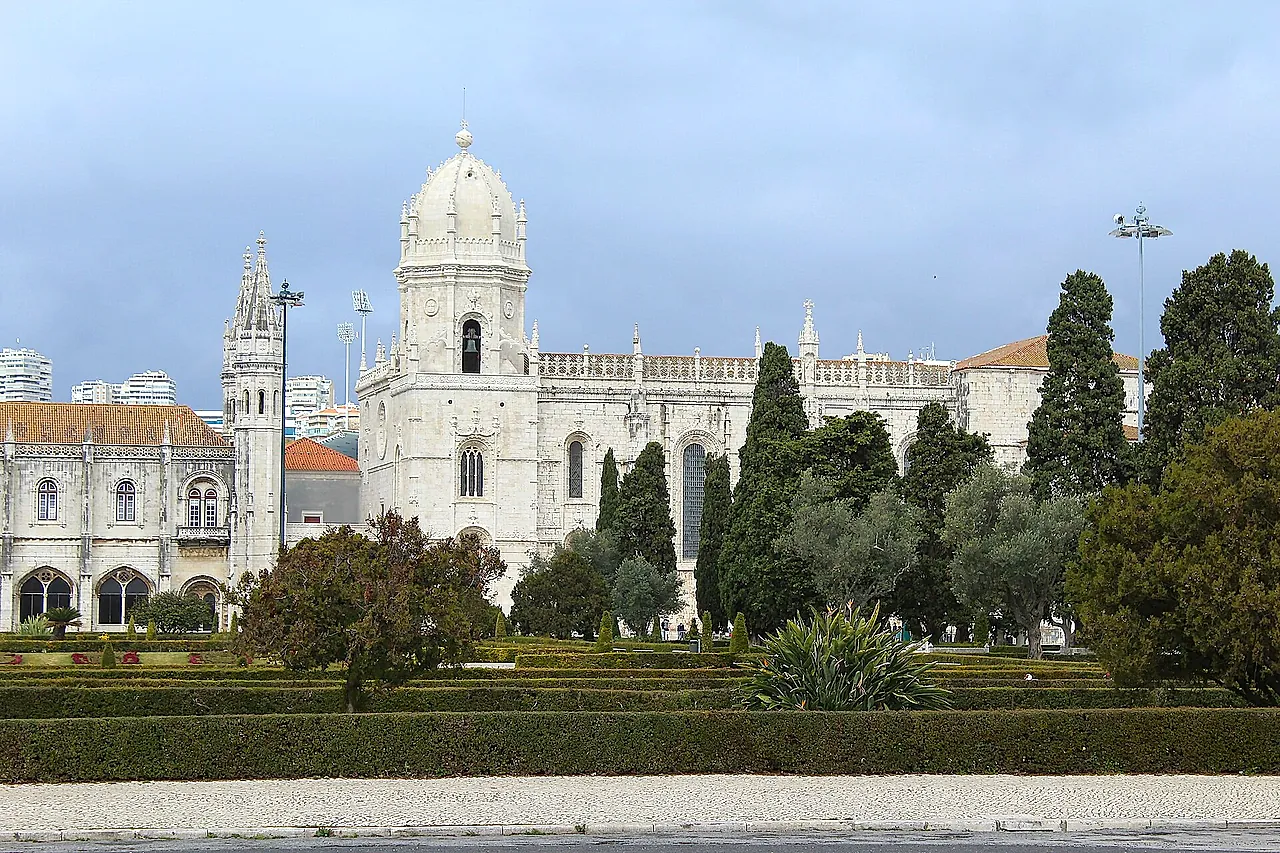
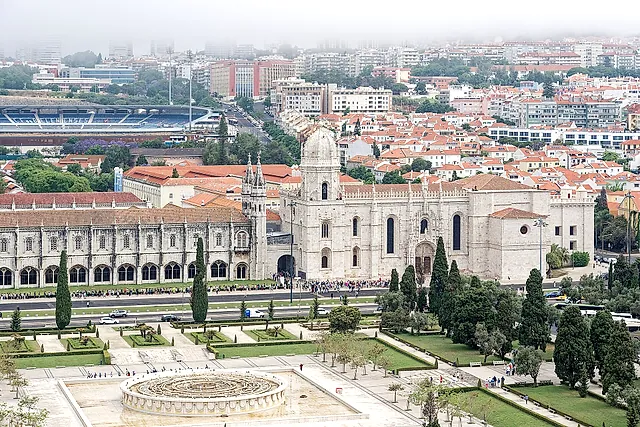
King Manuel I had the monastery built for monks of the Order of Saint Jerome, who were to pray for the king and give spiritual help to the sailors leaving Lisbon, according to UNESCO. It stands on the site of a hermitage of Our Lady of Belém, which Murray’s 1875 handbook (p. 26) says Prince Henry the Navigator founded for the use of mariners. The monument’s website gives the laying of the first stone as 6 January 1501 or 1502, and UNESCO says the building began in 1502.
Baedeker’s 1913 handbook (p. 505) says that Vasco da Gama spent the night here before setting out on his voyage of discovery (8 July 1497). The monument’s website adds that he prayed and kept vigil here on 7 July, on the eve of the fleet’s departure for India.
The south portal
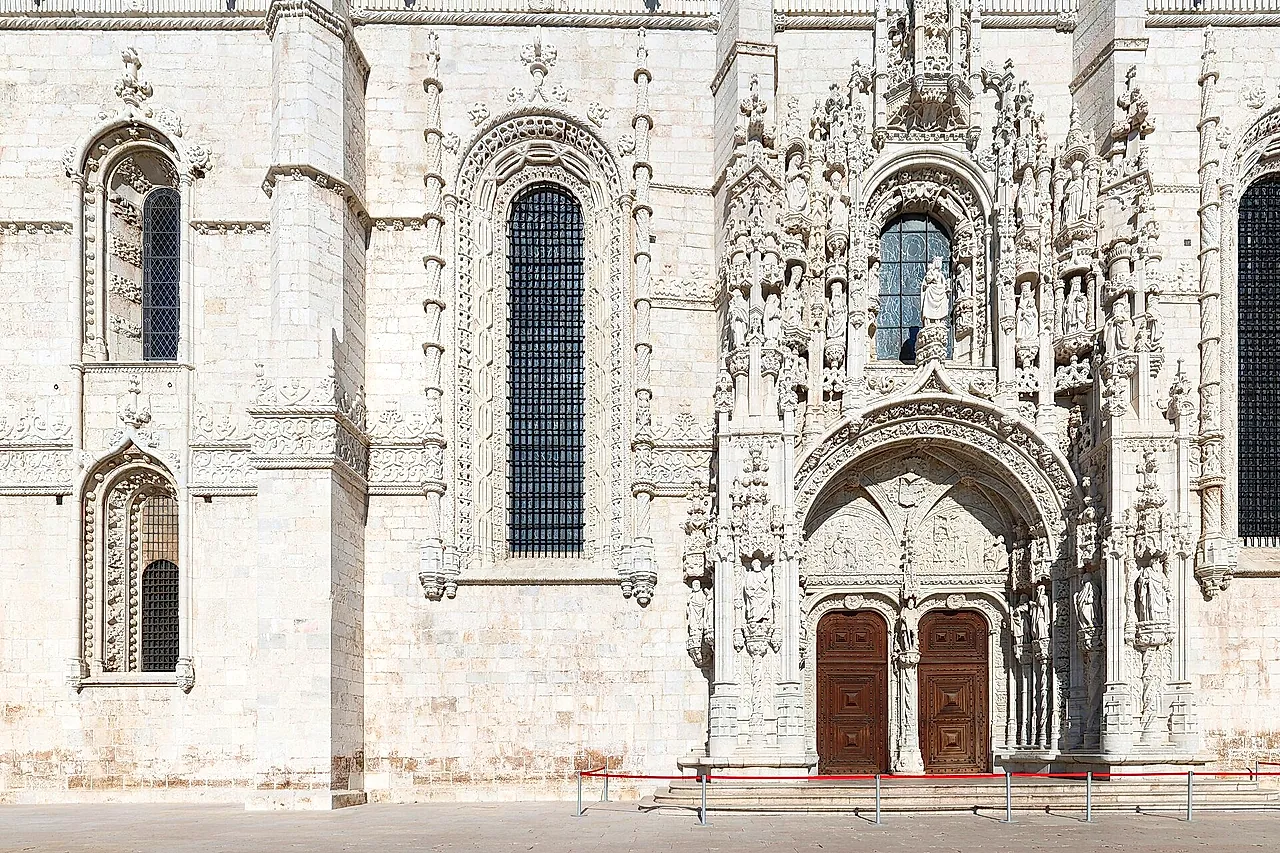
The portal on the square was built in 1517-1518 by João de Castilho, according to the monument. The Archangel Michael stands at the top and Our Lady of Belém at the centre, with prophets, apostles and sibyls at the sides. Between the twin doors is the figure of Prince Henry the Navigator, though Baedeker (1913, p. 506) asks whether it is Vasco da Gama or Henry.
The west portal, carved by Nicolau Chanterene in 1517, is described by the monument as the first work of the Renaissance in Portugal.
The church and its vault
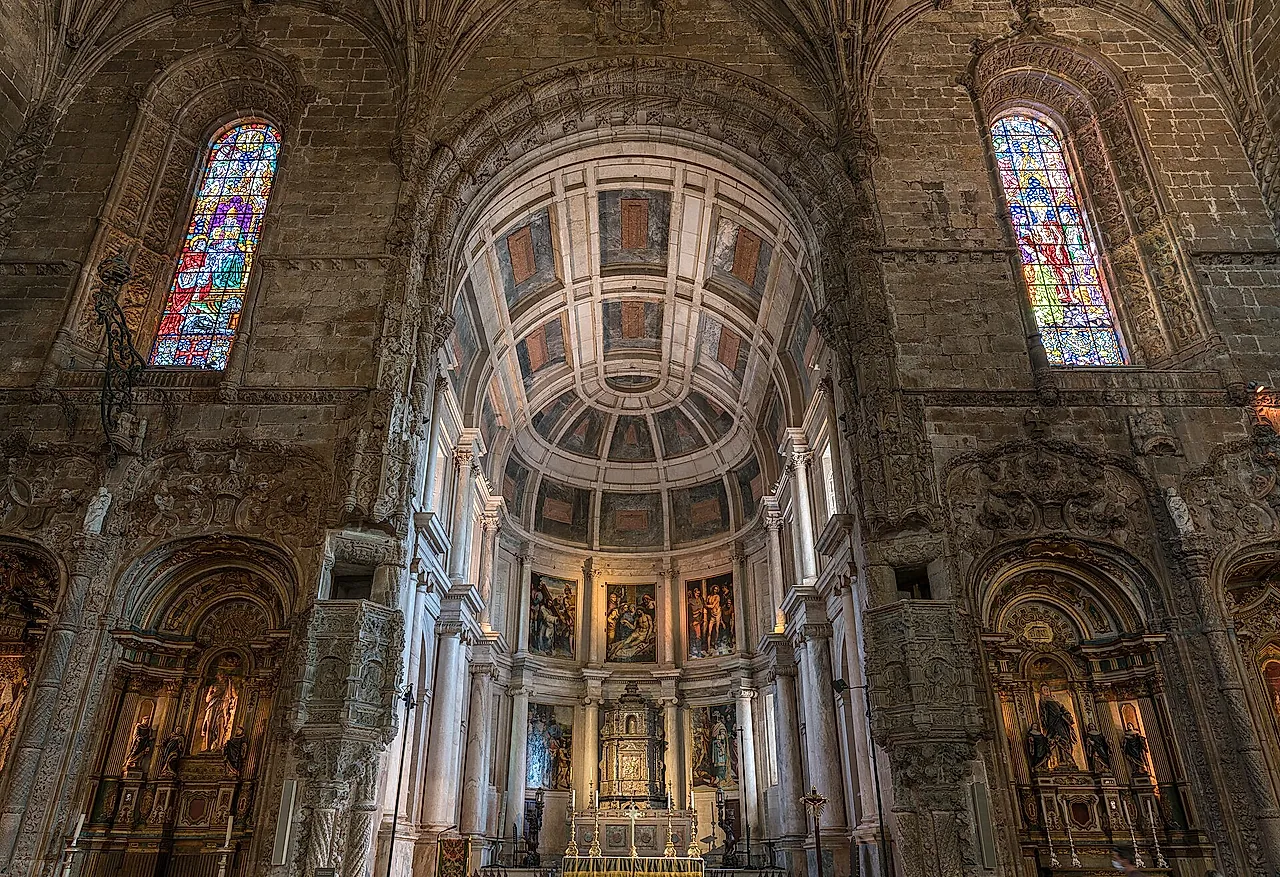
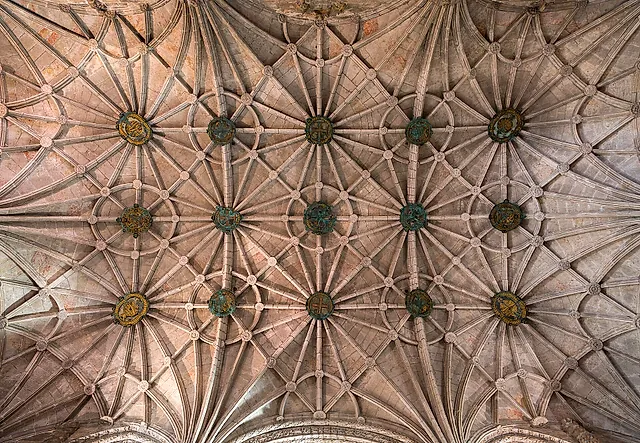
Inside, the three naves are the same height under a single low vault with many ribs, resting on eight octagonal pillars, according to the monument; it calls the church one of the main hall churches in Europe. Entry to the church is free, with its own hours.
The chancel and the royal tombs
The chancel (capela-mor) was built on the orders of Queen Catherine, widow of John III, to a design by Jerónimo de Ruão, and has a coffered marble vault. On both sides stand the tombs of Manuel I and Queen Maria of Aragon and of John III and Catherine of Austria, carried by marble elephants.
Baedeker (1913, p. 506) describes the same arrangement. In the transept lie the tombs of other princes and of Cardinal-King Henry, and the monument places the tomb of King Sebastian there.
The tombs of Vasco da Gama and Camões
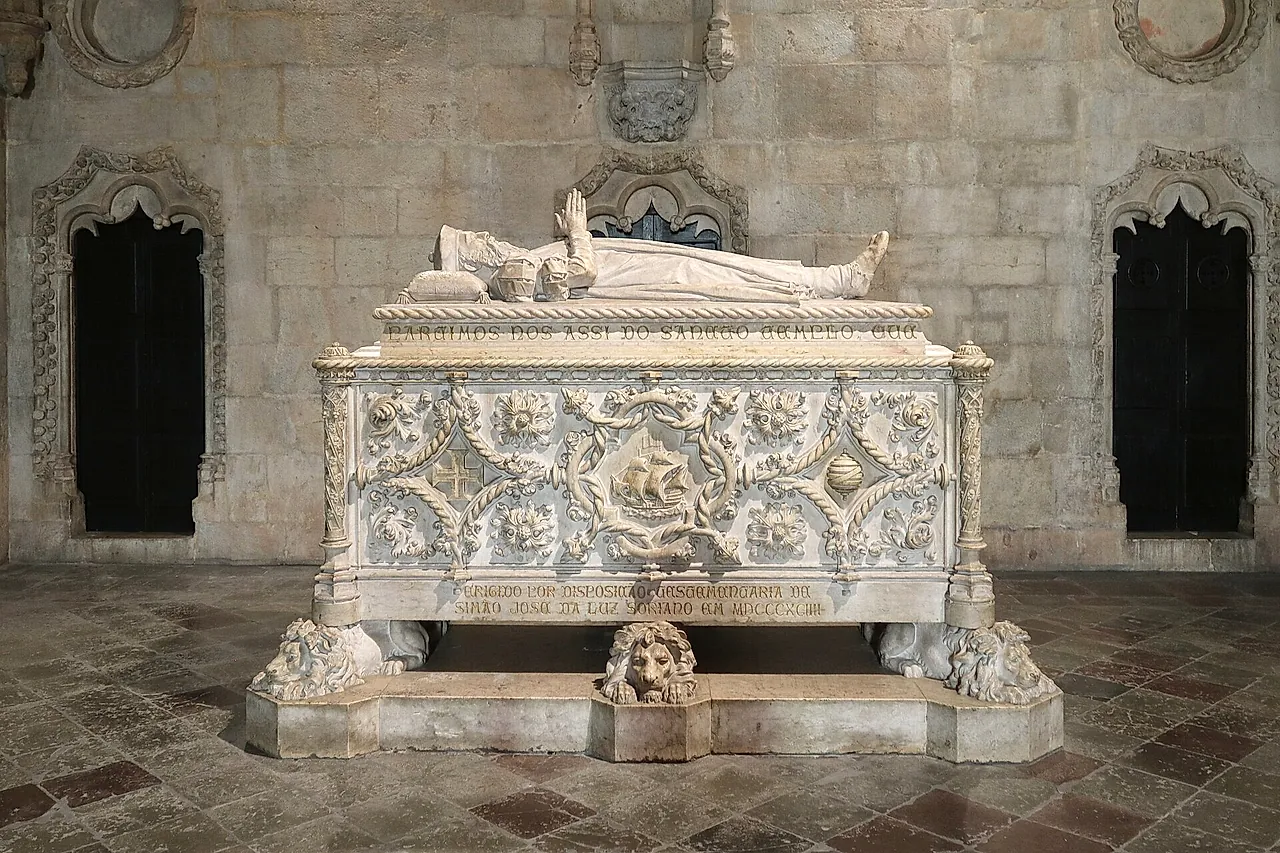
In the sub-choir, at the entrance of the church, the tomb of the poet Luís de Camões is on the right and the tomb of Vasco da Gama on the left. They are neo-Manueline monuments carved by António Augusto da Costa Motta for the tercentenary of Camões, celebrated in 1880, according to the monument.
Fernando Pessoa’s funerary monument is in the north gallery of the cloister’s ground floor; his remains were moved here in 1985.
The cloister
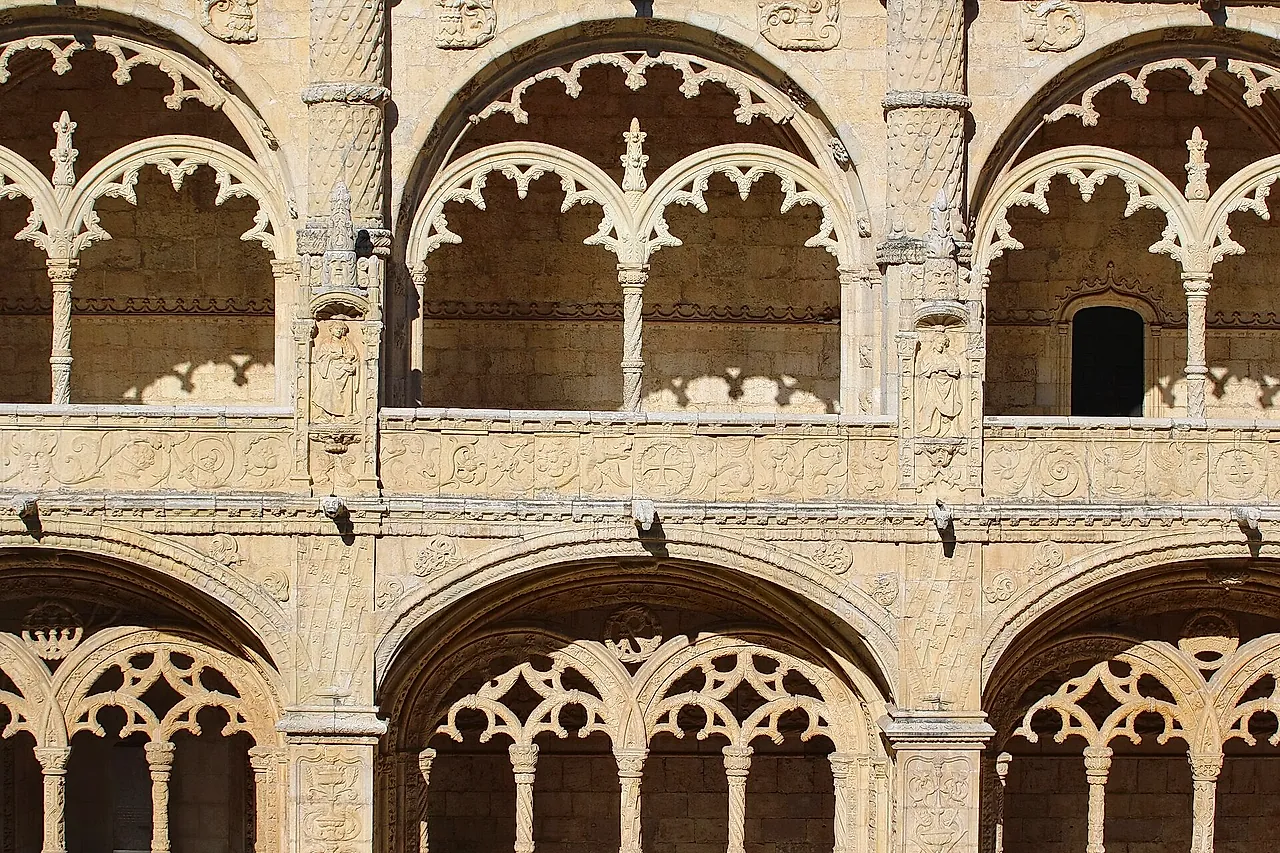
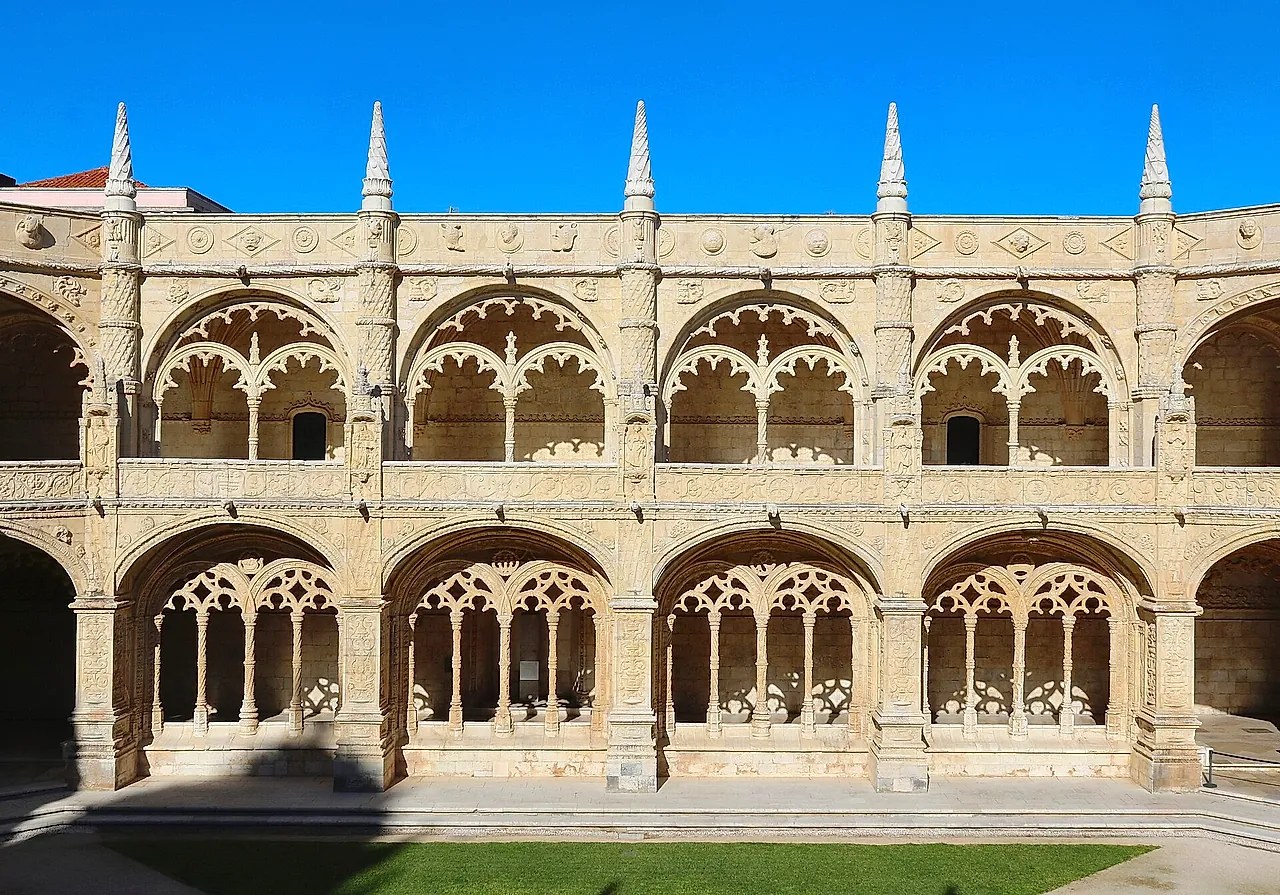
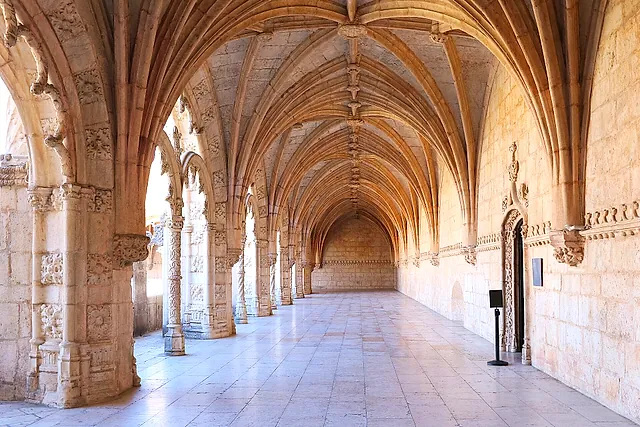
The cloister is a square with cut corners and two storeys. Diogo de Boitaca planned it and finished the ground floor, and João de Castilho and Diogo de Torralva completed the upper floor in 1540-1541. The upper balustrade has twenty niches with life-size statues, according to the monument.
Baedeker (1913, p. 507) says a visit to the cloister is “a thing never to be forgotten”. The ground floor is accessible to wheelchairs, but the first floor is not.
Refectory, sacristy and chapter house
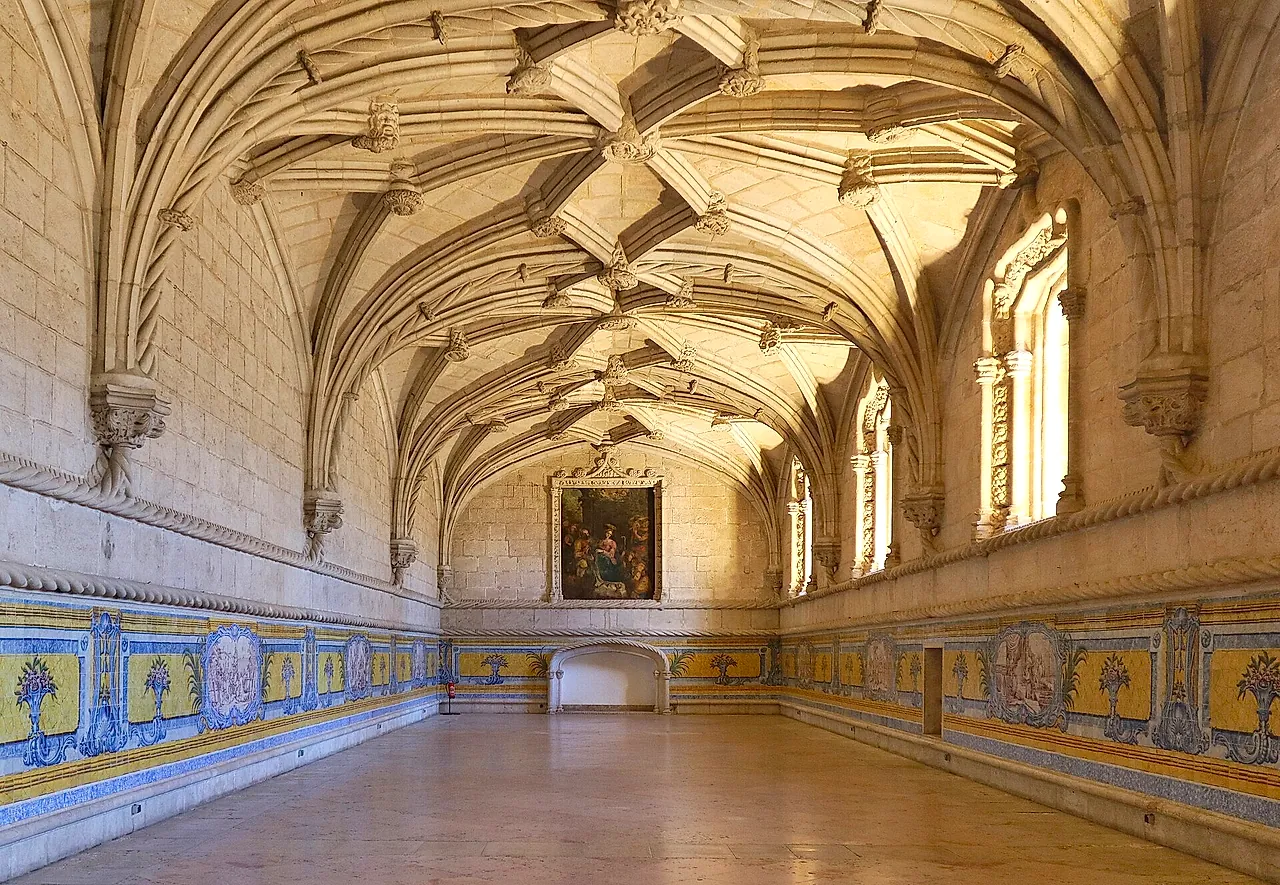
The monument’s plan lists on the ground floor the sacristy, the former refectory and the chapter house with the tomb of the writer Alexandre Herculano. The refectory was built in 1517-1518 and its walls are lined with 18th-century azulejos showing the story of Joseph in Egypt.
The official pages we read do not say which of these rooms are open on a normal visit. Tiqets lists the former refectory as included in its entry ticket.
Neo-Manueline additions and the Casa Pia
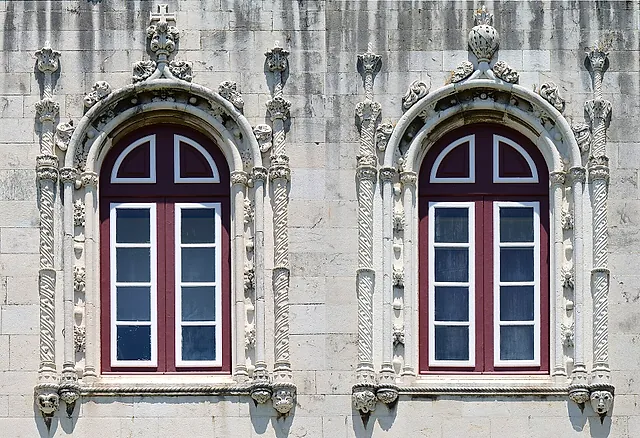
After the religious orders were dissolved in 1833, the Casa Pia, an institution for orphans and the poor, occupied the buildings from 1834 to 1940. The monument says most of the maritime decoration visible today, such as ropes, fish and anchors, belongs to the restored parts of the 19th century.
The National Museum of Archaeology, in the same building, is closed for refurbishment and is not part of the visit. The Maritime Museum, also in the building, is run by another body and has its own ticket.
Visitor guide
Jerónimos Monastery Tickets: Time Slots, Free Entry, Options
How Jerónimos Monastery tickets work in Lisbon: a set day and time slot, queues, who enters free, the free church, guided visits and combined tickets.
What to See at Jerónimos Monastery: Portal, Church, Cloister
What to see at the Jerónimos Monastery in Lisbon: south portal, church vault and royal tombs, Camões and Vasco da Gama, cloister, refectory, Pessoa.
Jerónimos Monastery Visit Tips: Getting There, Rules, Nearby
Tips for the Jerónimos Monastery in Lisbon: tram 15E, buses and the Belém train, no metro, bag and photo rules, accessibility, closures, nearby.
History of the Jerónimos Monastery: Sailors' Chapel to UNESCO
How the Jerónimos Monastery in Lisbon came about: the sailors' hermitage, Manuel I and the Hieronymites, the builders, 1834, Casa Pia, UNESCO.